Best AI Recruiting Tools for Real Estate Firms to Simplify Hiring

Hiring in real estate is hard enough.
Now add dozens of applications, résumés that all look the same, candidates who disappear halfway through the process, and recruiters trying to fill several roles at once.
You can keep throwing more hours at the problem, or catch up with the times. According to the NRA, 68% of realtors already use AI tools at least occasionally, with one in five using them every day.
AI is becoming part of how the real estate industry works, and recruiting is following the same path.
But the hard part isn’t deciding if you should use AI. It’s figuring out which platform is worth your time.
Next, we’ll break down the best AI recruiting tools for real estate firms, where each one fits, and how to avoid paying for features your team will never use.
TL;DR
If you’re comparing AI recruiting tools, start here:
- The best platform depends on who you’re hiring. Recruiting experienced agents isn’t the same as hiring property managers, accountants, or operations staff.
- Real estate-specific tools have a clear advantage. Many use MLS data, agent production, and brokerage movement signals that general recruiting platforms simply don’t have.
- AI should save your recruiters’ time, not replace them. The strongest teams use AI for sourcing, screening, scheduling, and follow-ups, then let people handle the conversations that matter.
- Don’t pay for features you’ll never use. A smaller brokerage and a national franchise rarely need the same recruiting platform.
- Look beyond AI. Integrations, reporting, CRM compatibility, and ease of adoption matter just as much as automation.
- Candidate experience still wins. Faster hiring is great, but people still expect clear communication and a human recruiting process.
Meet the Best AI Recruiting Tools for Real Estate Firms in 2026
Looking for an AI recruiting tool? You won’t have trouble finding one.
The real challenge is finding one that fits the way your firm hires. That’s why comparing feature lists only gets you so far.
Here’s a closer look at six tools focused on real estate worth considering:
1. Courted
Website: courted.io
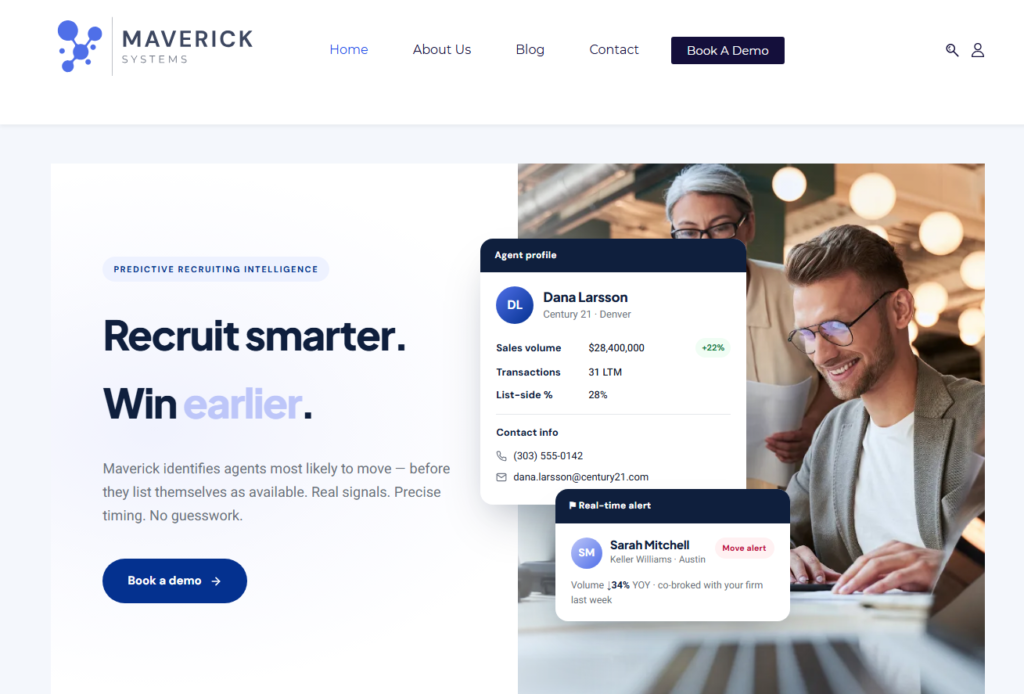
If bringing experienced agents into your brokerage is the goal, Courted is built for that job.
Instead of asking recruiters to spend hours searching for prospects, it recommends agents every day using production and market data. It also suggests why each person could be a good fit and helps you send more personal outreach from the start.
Another plus is that recruiting isn’t the only focus. Courted also helps you keep current agents engaged, making it useful for firms that care just as much about retention as growth.
Best Features:
- Daily AI-powered agent recommendations.
- Agent production and market intelligence.
- ComposeAI outreach message generation.
- MLS-informed personalized messages.
- Recruiting pipeline management.
- Interaction tracking, reminders, and follow-up tasks.
- Agent recruiting and retention workflows.
Pros:
- Built specifically for residential brokerages.
- Shows you which agents deserve your attention first.
- Keeps recruiting, outreach, and follow-ups in one place.
- Uses real market data to personalize conversations.
- Supports both recruiting and retention.
Cons:
- Focuses mainly on licensed agent recruiting.
- Not designed for hiring office or operational staff.
- Doesn’t publish pricing publicly.
- Works best in markets with strong data coverage.
Best for: Residential brokerages and franchise growth teams looking to recruit experienced agents more consistently.
2. Relitix
Website: relitix.com
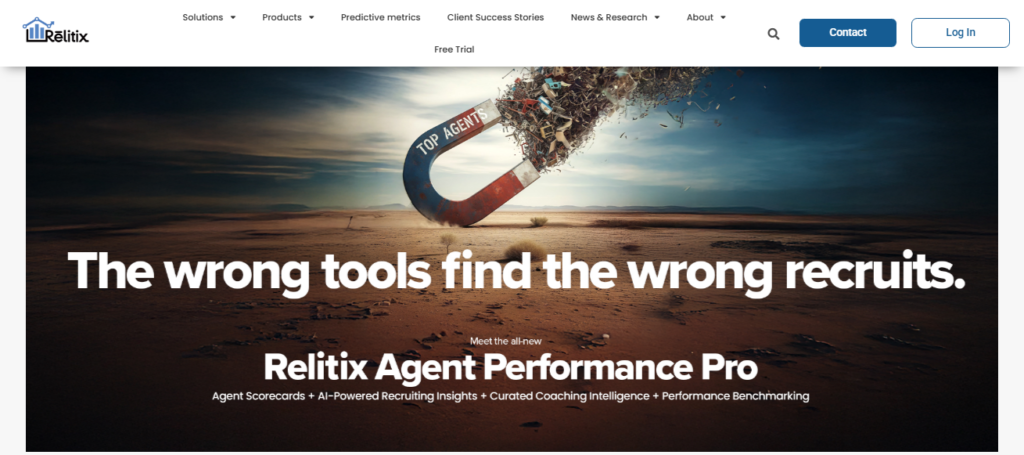
Some recruiters trust their instincts. Relitix gives them data to back those instincts up.
This platform combines MLS information, AI, and predictive analytics to help you spot agents who could be ready for a move. It also highlights retention risks inside your own brokerage, giving your team a chance to act before someone walks away.
If your CRM already handles relationships, Relitix adds another layer by helping you decide who deserves your attention next.
Best Features:
- MLS-integrated agent intelligence.
- Agent production scorecards.
- Switch Risk predictions.
- Recruiting prospect identification.
- Rookie Potential ratings.
- Agent milestone tracking.
- Competitive brokerage analysis.
- Retention and coaching insights.
- Listing performance intelligence.
Pros:
- Built specifically for real estate recruiting.
- Uses MLS and production data instead of generic hiring signals.
- Supports recruiting, coaching, and retention.
- Includes a free 15-day trial.
- Offers a lower-cost XPress version for smaller brokerages.
Cons:
- Designed mainly for agent recruiting.
- Depends heavily on MLS coverage.
- XPress is only available in selected U.S. markets.
- Most firms will still need a separate ATS or CRM.
Best for: Brokerages that want to recruit productive agents using MLS data and predictive insights.
3. Wizehire

Website: wizehire.co/real-estate-recruiting
Not every opening in a real estate company is for an agent.
If you’re also hiring property managers, transaction coordinators, accountants, office managers, or acquisitions specialists, Wizehire makes a lot of sense.
Its AI assistant, Scout, reviews applicants, points out stronger matches, recommends next steps, and helps keep candidates moving through the hiring process. It also combines AI with real hiring coaches, which makes it a good fit for firms without a dedicated HR team.
Best Features:
- AI candidate matching and prioritization.
- AI-assisted job ad creation.
- Real estate job description templates.
- Distribution to more than 100 job boards.
- Automated phone screening.
- Interview scheduling and reminders.
- Candidate relationship management.
- Talent nurture campaigns.
- Shared interview guides.
- Behavioral assessments.
Pros:
- Handles both agent and non-agent hiring.
- Includes real estate-specific hiring resources.
- Combines AI with human hiring support.
- Easy to use for smaller recruiting teams.
- Offers transparent pricing.
Cons:
- Doesn’t use MLS data to evaluate agents.
- Some plans limit active job postings.
- Better suited to small and mid-sized firms.
- Costs can increase as hiring grows.
Best for: Small and mid-sized brokerages, property management companies, mortgage firms, and real estate businesses hiring both agents and support staff.
4. Brivity Recruiter.ai
Website: brivity.com/recruiter-ai
Already using Brivity to manage leads, transactions, and your CRM? Then you probably don’t need another recruiting platform sitting on the side.
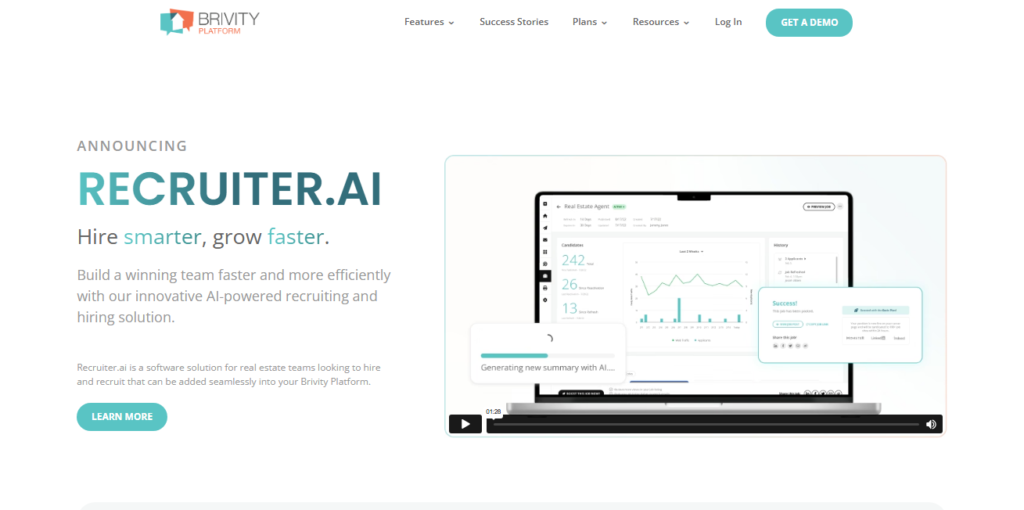
Recruiter.ai is Brivity’s AI hiring solution, so everything stays connected. You can post jobs, screen applicants, automate follow-ups, and track candidates without jumping between different tools.
That won’t matter much if your business runs somewhere else. But if Brivity is already part of your day-to-day, keeping recruiting there makes life a lot easier.
Best Features:
- AI-powered job post refreshing.
- Job advertising across major employment sites.
- Candidate screening.
- Automated follow-up.
- Recruiting pipeline tracking.
- Applicant market insights.
- Brivity Auto Plans for long-term candidate nurturing.
- Brivity CRM integration.
Pros:
- Built for real estate teams.
- Supports agent and staff hiring.
- Keeps recruiting inside Brivity.
- Makes follow-ups almost automatic.
- Helps build a stronger hiring pipeline over time.
Cons:
- Requires a Brivity Platform subscription.
- Makes the most sense if you already use Brivity.
- It could be more than some firms need.
Best for: Real estate teams already running their business on Brivity.
5. Maverick Systems
Website: mavericksystems.com
Finding experienced agents isn’t usually the hard part; figuring out which ones are worth calling first is.
That’s exactly what Maverick Systems is built to do.
It analyzes more than 50 data points for every agent, including production history, listings, market activity, and brokerage relationships. Then it tells you who’s showing signs they could be ready for a move.
This tool also gives you a head start on the conversation with AI-generated emails and call scripts based on each agent’s activity.
Best Features:
- Analysis of 50+ data points per agent.
- Agent production and activity profiles.
- Brokerage movement alerts.
- Rising-agent identification.
- Deal, listing, and co-broker triggers.
- AI-generated recruiting emails.
- Personalized call scripts.
- Automated follow-up sequences.
- Recruiting CRM.
- Mobile alerts.
- Productivity tool integrations.
Pros:
- Built specifically for recruiting agents.
- Helps you focus on the best recruiting opportunities.
- Makes outreach feel much more personal.
- Connects sourcing, outreach, and follow-ups.
- Supports both recruiting and retention.
Cons:
- Doesn’t target office or corporate hiring.
- Smaller teams may not use all the available data.
- Depends on local market information.
- Better suited to active brokerage recruiting than occasional hiring.
Best for: Brokerages that recruit experienced agents throughout the year.
6. Realty AI
Website: realty-ai.com
Here’s something a lot of firms don’t think about. Someone visits your recruiting page, looks around for a couple of minutes… and leaves.
That could have been a great candidate.
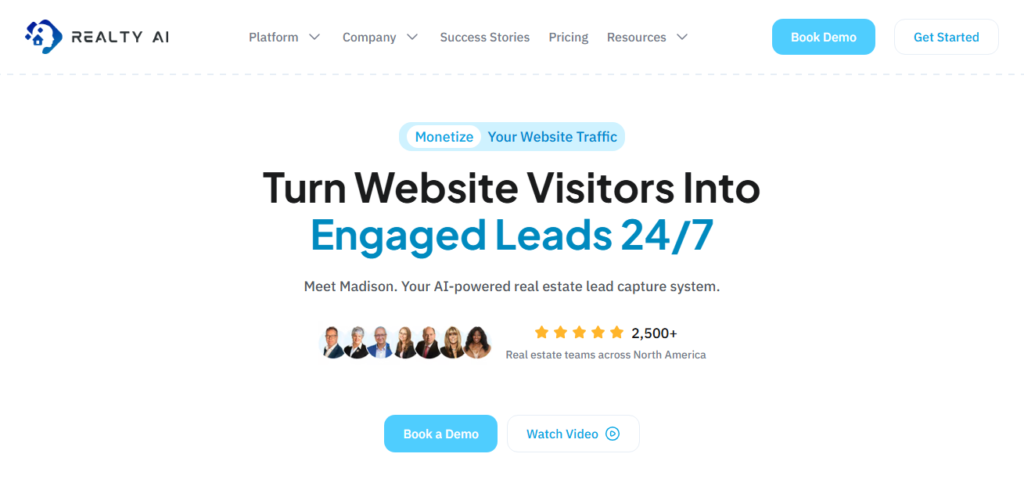
Realty AI’s Madison chatbot is built to stop that from happening. It starts the conversation right away, answers common questions, qualifies the candidate, and lets your recruiters know when someone is ready for a real conversation.
It’s a much smarter approach than asking people to fill out a contact form and hoping they stick around.
Best Features:
- 24/7 candidate engagement.
- Real estate-specific recruiting conversations.
- Automatic candidate qualification.
- License-status collection.
- Candidate intent scoring.
- Full candidate profiles.
- Recruiter notifications.
- CRM synchronization.
- Text and email alerts.
- Built-in conversational safeguards.
Pros:
- Built specifically for real estate recruiting.
- Engages candidates day or night.
- Qualifies people before recruiters step in.
- Captures more information than a basic form.
- Easy to add to an existing website.
Cons:
- Focuses on inbound candidates.
- Doesn’t identify prospects through MLS data.
- Isn’t a complete ATS.
- Depends on traffic to your recruiting website.
Best for: Brokerages that already attract candidates through their website and want to convert more of those visits into real recruiting conversations.
What AI Recruiting Tools Can Do for Real Estate Firms
Hiring can eat up your whole week before you’ve even interviewed anyone.
You’re posting jobs, reviewing résumés, answering emails, chasing candidates who disappeared after the first interview, and trying to find an open spot on everyone’s calendar.
By the end of the day, you’ve been busy…
…but the important conversations haven’t even started yet.
Well, AI recruiting tools help with that.
They take repetitive work off your team’s plate so recruiters have more time to talk to candidates, build relationships, and keep the hiring process moving.
Real estate firms are already heading in that direction. According to JLL’s 2026 Future of Work Survey:
- 78% of real estate leaders expect AI to significantly affect real estate portfolios and CRE functions over the next three to five years.
- Only 15% say they’ve moved beyond the early stages of AI adoption.
Most firms already know AI has a place in recruiting. Now they’re working out where it brings the most value.
Why Real Estate Firms Have Unique Hiring Challenges
You finally fill one opening… then two more show up.
An experienced agent leaves, your property management team needs another hire, and accounting asks for help.
Before long, you’re managing several searches at once, and none of them look the same.
Recent hiring data in the industry shows how varied those searches have become:
- 56% of firms planned to hire in property management.
- 51% expected hiring in finance and accounting.
- 48% planned hiring in asset management.
- Most openings were for mid-level and junior roles, not executives.
Keeping all those searches moving is hard enough. Before long, you’re dealing with candidates, interviews, and follow-ups all at once.
A good AI recruiting tool keeps everything organized, so your team can stay focused on the hiring process.

How AI Recruiting Tools Support Each Stage of Hiring
The interview is only one part of hiring.
Before you even get there, someone has to write the job post, review applications, answer candidate questions, schedule interviews, send reminders, and follow up with people who haven’t replied.
Those jobs take a lot of time, and recruiters are already using AI to speed them up.
According to Employ’s 2025 Recruiter Nation Report:
- 41% use AI for candidate communication.
- 41% use AI to help write job descriptions.
- 40% use AI for candidate matching.
- 33% use AI to generate interview questions.
The trend goes beyond real estate. HireVue’s 2026 Global AI in Hiring Report found similar results:
- 77% of HR teams use AI every week or every day.
- 85% plan to expand their use of generative AI during 2026.
- Recruiters using AI reported a 52% improvement in hiring speed.
Saving time is only part of the benefit.
The bigger win is giving recruiters more time for the conversations, interviews, and follow-ups that actually help them make better hiring decisions.
Where AI Adds Value Without Replacing Recruiters
A lot of people still worry that AI will replace recruiters.
It won’t. Hiring is still a people business.
Software can organize information, suggest good candidates, and automate repetitive work. But it can’t build trust or decide who’s the best fit for your team.
Candidates seem to see it the same way. As Greenhouse reports:
- 38% of U.S. candidates had withdrawn from a hiring process because of an AI interview.
- 70% said AI wasn’t clearly disclosed beforehand.
- More than half never received an outcome after completing the interview.
The lesson isn’t to stop using AI. Instead, use it where it actually helps.
Key Insight: A 2026 study found something similar. Recruiters got the best results when AI handled repetitive tasks, leaving them more time for interviews, conversations, and hiring decisions.
That approach makes the most sense for real estate firms, too. Give AI the repetitive work, and keep the people focused on people.
The Features to Look for in AI Recruiting Tools for Real Estate Firms
Open the websites of five AI recruiting platforms, and you’ll notice something pretty quickly.
They all sound great: better hiring, smarter AI, faster recruiting.
After a while, every platform starts sounding exactly the same.
So don’t worry about who has the longest feature list. Think about the problems your recruiting team deals with every week.
Here’s what we’d pay attention to:
- AI-powered candidate sourcing: Finding the right experienced candidates before another firm does is the hard part. AI should help your team get there faster.
- Resume screening and candidate matching: Your recruiters shouldn’t have to dig through dozens of applications just to find a few strong candidates. Let AI handle the first pass, so they can focus on the conversations that matter.
- Interview scheduling and workflow automation: If recruiters are still chasing calendars and sending reminder emails all day, they’re spending time in the wrong place. Automating those tasks gives them more time with candidates.
- ATS and CRM integrations: Your recruiting process shouldn’t live in five different systems. The right platform fits into the tools your brokerage or real estate firm already uses.
- Reporting and hiring analytics: Hiring starts to get a lot easier when you can see which offices are struggling to fill roles, where candidates are dropping off, and what’s slowing the process down.
- Data privacy and compliance: Candidate information deserves the same level of care as any other business data. Your recruiting platform should help protect both your candidates and your firm.
You don’t need every AI feature on the market. Pick the features that save your recruiters time and make hiring feel easier every day.
Key Insight: Recruiters are looking for more than faster hiring. Employ’s 2025 report also shows they’re also thinking about data privacy, human oversight, explainable AI, and compliance.
How to Choose the Right AI Recruiting Tool for Your Real Estate Firm
Here’s where a lot of firms get stuck: they compare software before they look at their own hiring process.
But hiring a new agent isn’t the same as hiring a regional property manager. And neither looks much like recruiting an executive to open a new market.
If your hiring needs are different, your recruiting platform should reflect that.
So, before you make a decision, keep these things in mind:
- Consider your hiring volume and team size: The platform that works for a boutique brokerage may not keep up with a firm hiring across several markets at the same time.
- Match the tool to your recruiting workflow: Think about the roles you hire most often and make sure the platform supports that process.
- Evaluate ease of implementation and adoption: If recruiters avoid using the platform after the first couple of weeks, the AI doesn’t really matter.
- Balance features, scalability, and budget: It’s okay to think about future growth. Just don’t pay today for features your team won’t touch for another three years.
The best recruiting platform is usually the one your team barely has to think about. It just fits the way they already work.

Avoid These Mistakes When Choosing an AI Recruiting Tool for Your Firm
We’ve seen this happen more than once.
A firm books a demo. Everyone loves it. Six months later, recruiters are back to spreadsheets because the platform never really fit the way they hired.
A little caution upfront can save you from that situation.
Here are a few mistakes worth avoiding:
- Choosing a platform with more features than you need: It’s easy to get excited about everything AI could do. Focus on the features your recruiting team will actually use every week.
- Ignoring integrations with your existing systems: If recruiters have to copy information between your ATS, CRM, and recruiting platform, AI isn’t saving much time.
- Expecting AI to replace human recruiters: The best candidates in real estate usually aren’t won over by automation. They join because someone built a relationship with them.
- Overlooking candidate experience: Great real estate professionals rarely stay available for long. If your hiring process feels slow or impersonal, someone else will probably hire them first.
Good software should remove friction.
If it feels like your team is working harder after buying it, something went wrong.
How to Get More From Your AI Recruiting Tool After You Choose One
Buying the platform feels like a big milestone. But it isn’t; that’s usually where the real work starts.
The firms that get the best results don’t spend their time chasing every new AI feature. They get really good at using the tools they already have.
Here’s where we’d start:
- Set clear hiring goals from the start: Decide what you’re trying to improve, whether that’s filling agent positions faster, hiring stronger property managers, or reducing time-to-hire across your offices.
- Train your team to use AI effectively: Give recruiters time to learn the platform so it becomes part of their routine instead of another tool they avoid.
- Review hiring data and refine your process: Look at where your strongest real estate hires are coming from, where candidates lose interest, and where your process can move faster.
- Keep the human touch throughout recruitment: Let AI handle repetitive tasks while recruiters focus on conversations, relationships, and the kind of follow-up that helps great candidates say yes.
Pro Tip: An AI tool can save you a lot of time, but it’s only part of the picture. If you want to bring more great agents into your brokerage, don’t miss our guide on how to recruit real estate agents.

Bottom Line: Hiring in Real Estate Doesn’t Have to Be Complicated
Every AI recruiting platform promises faster hiring. That’s the easy part.
The challenge is finding a platform that fits the way your real estate firm hires.
So before you sign a contract, slow down for a minute. Look past the demos and the feature lists. Think about the problems your team deals with every week and choose the platform that helps solve those first.
At Estate Skyline, we know hiring in real estate isn’t the same as hiring in every other industry. The right people can change the direction of a brokerage, a property management company, or an investment firm.
If you need help to get the right talent for your firm, let’s talk.
FAQs
Which is the best AI tool for recruitment in real estate?
It depends. The best tool is the one that fits the way your team hires, not the one with the longest feature list. That could look very different for an independent broker than it does for a national real estate company.
How can AI recruiting tools improve hiring for real estate firms?
Think about where your recruiters spend most of their time: searching for candidates, reviewing résumés, scheduling interviews, or following up with hiring managers.
AI takes repetitive tasks off recruiters’ plates, leaving more time to connect with candidates and move them through the hiring process faster.
Which features should real estate firms look for in AI recruiting tools?
Start with the features that solve everyday hiring problems. AI-powered candidate sourcing, résumé screening, interview scheduling, ATS and CRM integrations, hiring analytics, and a clear dashboard are all worth looking for.
More importantly, choose a platform that supports the types of real estate roles you hire most often.
Why do real estate firms benefit from AI recruiting tools?
Real estate hiring doesn’t stay still for very long. AI helps recruiters keep up by cutting down on repetitive work and keeping the hiring process moving. The paperwork doesn’t disappear, but it stops getting in the way of hiring.


- TL;DR
- Meet the Best AI Recruiting Tools for Real Estate Firms in 2026
- What AI Recruiting Tools Can Do for Real Estate Firms
- The Features to Look for in AI Recruiting Tools for Real Estate Firms
- How to Choose the Right AI Recruiting Tool for Your Real Estate Firm
- Avoid These Mistakes When Choosing an AI Recruiting Tool for Your Firm
- How to Get More From Your AI Recruiting Tool After You Choose One
- Bottom Line: Hiring in Real Estate Doesn't Have to Be Complicated
- FAQs