What Real Estate Firms Miss When They Ignore Brand Search Visibility

Most real estate firms think about visibility in terms of traffic, rankings, and lead generation.
That is understandable, but it misses a more important point. In real estate, search visibility often shapes trust long before a prospect speaks to an agent, books a valuation, or replies to a recruiter.
It is not simply about being found. It is about what people discover when they go looking for reassurance.
Many firms underestimate this because brand search does not always appear neatly in reporting. It sits in the gap between awareness and action, yet that gap has a powerful influence on how people judge credibility, professionalism, and fit.
A prospect may hear your name through a referral, see one of your boards, notice your firm on social media, or come across one of your agents in the market. The next step is often not a call. It is a search.
That search becomes a quiet but important moment of evaluation. People want to know whether the firm looks established, current, relevant to their needs, and easy to trust.
If the results support that impression, confidence rises. If they create doubt, hesitation begins before your team has any chance to influence the conversation.
Brand Search Visibility Is More Than a Marketing Metric
When people talk about search visibility, they often mean broad commercial terms such as “estate agents in Manchester” or “property brokerage in Miami”.
Those rankings matter, especially in competitive local markets, but brand search visibility is a different and often more revealing layer.
It includes what appears when someone searches for your company name, office name, founder, senior brokers, or combinations of your brand with words such as reviews, careers, locations, or specialist services.
It covers your website, Google Business Profile, review platforms, social profiles, directory listings, press mentions, and the third-party references that help shape the public picture of your business.
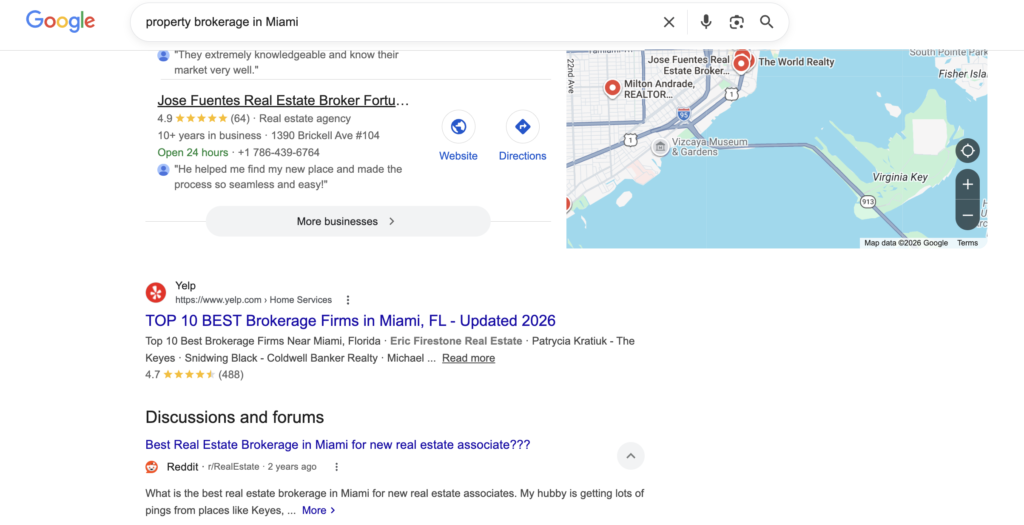
This is where people form fast judgments. They are not only asking whether your firm exists. They are trying to decide whether it feels active, credible, professional, and relevant.
That is why brand search visibility should be treated less as a narrow SEO metric and more as a commercial asset. It influences first impressions, supports referral conversion, and helps explain why two firms with similar local presence can generate very different levels of trust.
The First Loss Is Usually Confidence, Not Traffic
One of the biggest mistakes firms make is waiting until traffic or lead numbers dip before treating visibility as a problem. In reality, the first issue is usually quieter. It shows up in weakened confidence.
A prospect searches your brand and sees a homepage title that says very little. They find inconsistent office details across directories. Your Google Business Profile has limited information, weak imagery, or a vague description. The review activity looks old.
Third-party sites rank above the pages you would actually want people to see. None of these issues may look dramatic on their own, but together they create friction.
That friction matters because real estate decisions are rarely casual. The National Association of REALTORS®’ 2025 Profile of Home Buyers and Sellers found that 88% of buyers purchased through an agent or broker, which underlines how central professional trust still is in the decision-making process.
Whether someone is considering a firm for a sale, a purchase, a referral partnership, or a career move, they want reassurance that the business feels credible and current. When search results fail to provide that reassurance, the next step becomes less likely, even if initial interest was strong.
This is also why referrals do not bypass search in the way many leaders assume. A referral often triggers search behaviour rather than replacing it.
Someone may trust the recommendation, but they still want to validate the firm for themselves. Search results become the place where that recommendation is either strengthened or weakened.
Weak Search Presence Can Lower Lead Quality Before It Lowers Volume
Most conversations about visibility focus on quantity. How many people found the site? How many forms were completed? How many valuation requests came through? These are useful questions, but they do not tell the whole story.
Brand search visibility also affects the type of lead that feels comfortable reaching out. When your digital presence is clear and well-maintained, people can quickly understand who you are, where you operate, what kind of clients you serve, and why others trust you. That reduces hesitation and tends to support stronger intent.
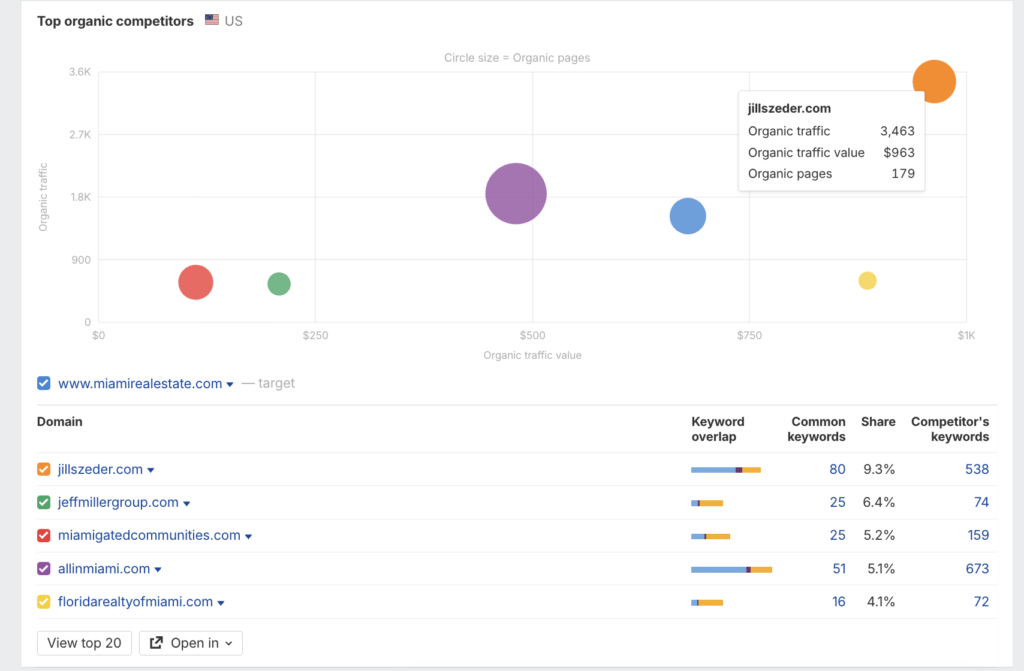
When your search presence is fragmented, the opposite happens. The people who do enquire are more likely to arrive with uncertainty. They need more reassurance. They compare more aggressively. They ask trust questions that could have been answered before contact. In some cases, the strongest prospects do not enquire at all because another firm simply looks easier to validate.
That is why brand search visibility influences lead quality as much as lead volume. It shapes how ready people feel before the sales conversation starts, and in real estate, that has a direct effect on conversion efficiency.
The Signals Firms Most Commonly Overlook
Many firms assume that if the homepage ranks first for the brand name, the job is done. In practice, searchers absorb a wider set of signals, and that broader picture often determines whether the brand feels trustworthy.
One of the most overlooked areas is review recency and response quality. A strong average rating helps, but prospects also notice whether reviews are current, specific, and reflective of real experiences.
BrightLocal’s 2026 Local Consumer Review Survey reinforces this point: reviews remain one of the strongest drivers of trust and decision-making, while older reviews lose persuasive power much faster than many businesses assume.
People also notice whether the business responds in a professional and human way. A profile with no recent reviews or no visible engagement can make an active firm look stagnant.
Another major factor is the quality of the Google Business Profile. For local and regional firms, this is often one of the first brand assets people see.
Google’s own Business Profile guidance makes clear that verified profiles can appear across Search and Maps, and that complete, accurate, up-to-date business information helps improve local visibility.
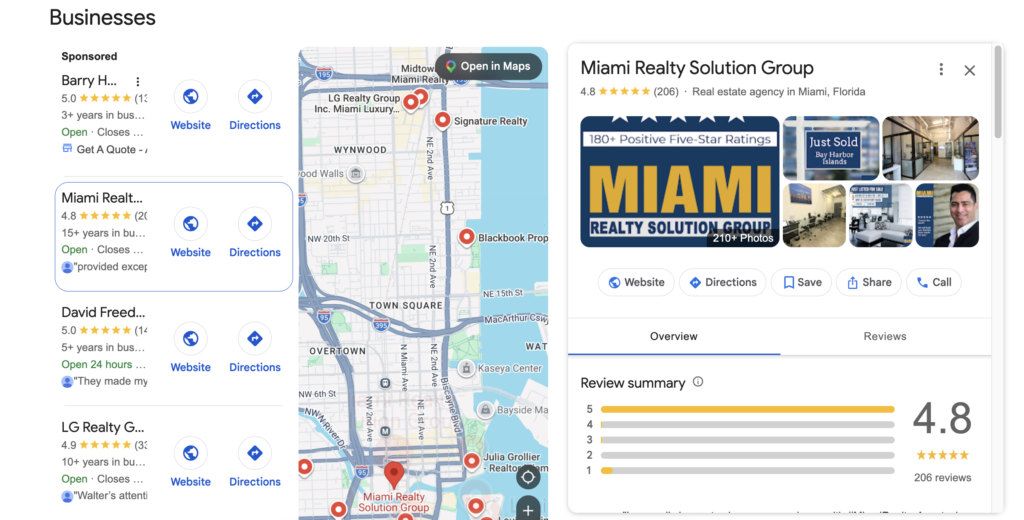
If the categories are unclear, the service area is incomplete, the images are poor, or the profile lacks depth, trust can drop quickly. A strong profile does not guarantee conversion, but a weak one can undermine it.
Then there are third-party mentions and directory listings. These are often treated as background noise, yet they play an important role in search validation. Inaccurate listings, outdated profiles, and low-quality references dilute confidence.
Relevant mentions, strong association profiles, local press references, and consistent directory information do the opposite. They reinforce legitimacy.
Firms also tend to underestimate leadership visibility. Searchers often look for people as much as brands. If senior brokers, founders, or team leaders have no meaningful presence, the business can feel faceless. Well-written bios, interviews, commentary, and visible expertise make the brand easier to trust because they put credible people behind it.
Finally, there is branded content depth. If someone searches your firm alongside terms such as reviews, team, careers, locations, or areas served, do you have strong assets that answer those questions? Or do you leave the narrative to third-party sites? The firms that perform best here are not necessarily the loudest. They are usually the ones that make validation easiest.
Brand Search Visibility Influences Recruitment Too
This issue is not limited to client acquisition. It also affects hiring and retention.
A real estate firm may invest heavily in recruitment outreach, careers messaging, and employer branding, but candidates still do their own checks.
An experienced agent considering a move will search the firm. So will operations staff, marketers, recruiters, and potential team leaders. They want to know whether the business looks modern, credible, active, and stable.
If the search footprint is weak, the firm can feel less attractive than it actually is. Candidates may question whether the business is growing, whether the leadership is visible, or whether the company is respected in its market. That does not always produce an explicit objection, but it can reduce enthusiasm before the first conversation takes place.
A stronger search presence supports recruitment because it lowers uncertainty. It gives candidates more evidence that the firm is serious, current, and worth considering. For businesses trying to recruit high-performing agents or expand into new markets, that matters more than many leaders realise.
A Practical Audit for Real Estate Firms
The good news is that improving brand search visibility does not always require a major rebrand or a complete website overhaul. In many cases, the first step is a structured audit focused on the assets that build confidence fastest.
Even a simple review, such as the checks recommended by CommerceTuned, can highlight where trust is being reinforced and where uncertainty is quietly creeping into the journey.
1. Search Your Brand Like a Prospect, Not an Insider
Search your company name, office names, founder names, and branded combinations involving locations or specialist services. Then look at the results with fresh eyes. Would someone unfamiliar with the business feel reassured by what they see on page one?
2. Review the Full Result Mix
Do not focus only on your own website’s results. Look at the full picture. Which pages dominate? Which review platforms appear? Which third-party profiles are visible? What impression would a prospect form in under a minute?
3. Look for Confidence Gaps
Pay attention to outdated metadata, weak descriptions, old reviews, inconsistent contact details, thin team pages, missing service-area information, and irrelevant pages that rank too highly. These are often the small issues that quietly reduce conversion confidence.
4. Compare Against Two Competitors
Search the brands of two firms you know are strong in your market. The contrast can be revealing. Some firms look organised, visible, and easy to validate. Others look fragmented even when they have a comparable offline presence. That comparison helps identify what your own brand footprint is missing.
5. Prioritise the Fixes That Build Trust Fastest
The quickest improvements often come from practical actions: strengthening the Google Business Profile, refreshing review acquisition and responses, improving branded page titles and descriptions, creating better leadership and team pages, and tightening location or service-related content. These may not feel glamorous, but they often produce the clearest trust gains.
Search Visibility Is Really About Reducing Friction
The reason this topic matters is simple. Strong brand search visibility reduces friction across the business.
It makes referral leads easier to convert because people can validate the recommendation quickly. It supports better sales conversations because prospects arrive with greater confidence.
It improves recruitment because candidates can see a more credible and active business. It also helps with partnerships and local positioning because the brand looks easier to trust.
That is why brand search visibility should not be treated as a narrow SEO concern. For real estate firms, it is part of the business infrastructure.
It affects how the market experiences your brand when nobody from your team is in the room to explain it.
And that is exactly why it is so often overlooked. When friction comes from weak search validation, it rarely appears as a single dramatic failure. Instead, it shows up as slower sales cycles, lower trust, more hesitant leads, and lost opportunities that are difficult to trace back to one cause.
What’s Next
If I were reviewing this inside a real estate firm, I would not begin by asking how to get more traffic. I would begin by asking a simpler question: what does a serious prospect see when they search our name?
That question leads to a more useful discussion. Does the business look current? Does it feel established? Are the right assets visible? Do the results strengthen trust or introduce doubt?
A branded search audit can answer all of that surprisingly quickly. Review your Google Business Profile, your review signals, your leadership visibility, your core branded pages, and the third-party references that shape public perception. Then identify the gaps that create uncertainty and fix them in order of commercial importance.
Because in real estate, visibility on its own is not enough. What drives growth is being easy to find, easy to understand, and easy to trust.


- Brand Search Visibility Is More Than a Marketing Metric
- The First Loss Is Usually Confidence, Not Traffic
- Weak Search Presence Can Lower Lead Quality Before It Lowers Volume
- The Signals Firms Most Commonly Overlook
- Brand Search Visibility Influences Recruitment Too
- A Practical Audit for Real Estate Firms
- Search Visibility Is Really About Reducing Friction
- What’s Next