How AI and Drones Are Reshaping Construction, And It Means for Employers
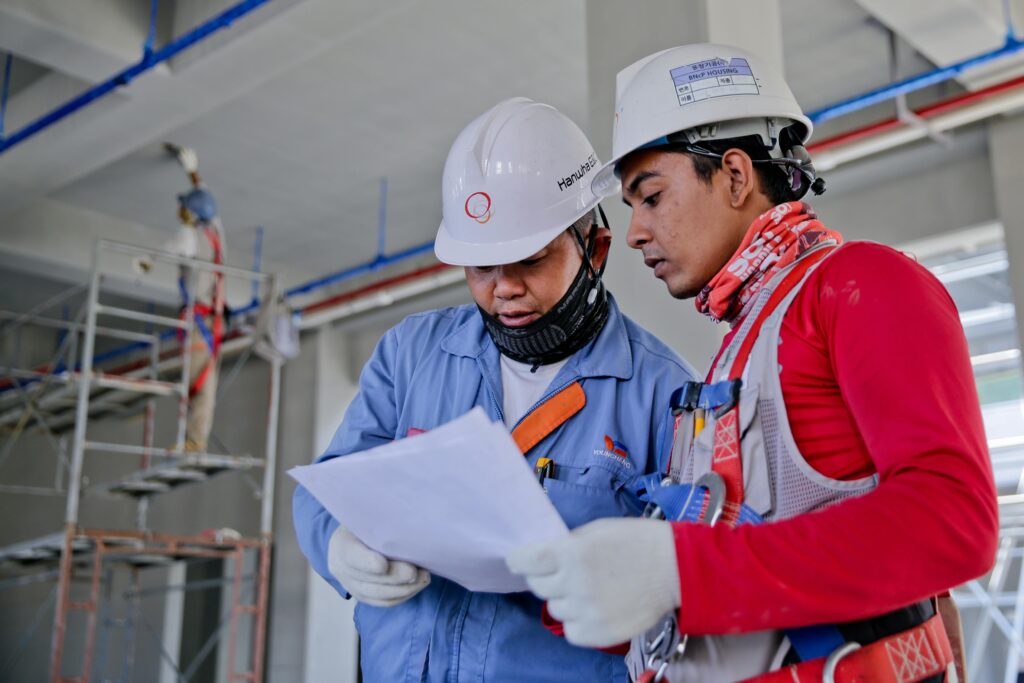
When I look back at how construction worked even a decade ago, it’s almost shocking how dramatically technology has reshaped our workflows.
Back then, digital tools were optional, something a construction company in St Louis might adopt gradually or not at all. Today, AI and drones are indispensable, but not because they’re trendy.
Projects have grown too complex for manual processes to keep up. I’ve seen these tools evolve on real jobsites: reducing risk and improving accuracy, speeding up decision-making, and unlocking capabilities we didn’t have before.
I’ve learned that AI and drones aren’t upgrades; it’s a shift in how we build. And that shift is coming faster than most teams realise.
And with that shift comes a major workforce impact: the demand for digitally fluent professionals (from drone-capable surveyors to data-aware superintendents and AI-assisted project managers) is rising quickly. Employers who recognise this evolution will be the ones best positioned to build stronger, future-ready teams.
Why AI and drones became construction game-changers
I remember when drone footage started coming out, mainly in marketing videos. But then came the sea change: the realisation that drones weren’t just giving us beautiful shots; they were collecting usable operational data.
A single drone could measure grading accuracy, flag the safety hazards, map out material placement, and show real progress at a level of detail we simply couldn’t capture from the ground.
Meanwhile, AI also rapidly moved from basic automation into genuinely predictive tools, able to analyse such things as scheduling risks, forecasting labour shortages, reading blueprints, or simulating design variations in a matter of seconds.
Taken together, both technologies set a new bar for accuracy and transparency across the whole construction lifecycle – a standard every forward-thinking construction company in St Louis is now striving to meet.
These tools today help teams by:
- Survey sites in minutes, not hours.
- Detect quality issues upfront.
- Predicting delays and bottlenecks
- Improve coordination between the field and the office.
- Improve safety through reduced exposure to hazardous areas.
The result is fewer surprises and expensive mistakes, and more predictable project outcomes.
📚 What this means for construction employers
Job titles may remain the same, but the competencies inside them have changed. Construction firms now need:
- Project managers who can read digital dashboards and interpret predictions
- Supervisors who are comfortable with drone data and field technology
- Estimators who understand AI-assisted forecasting
- Engineers fluent in BIM, automation, and model-based workflows
Employers who adjust their hiring expectations to these new skill sets will build more capable and future-proof teams.
How AI improves planning and design
It’s in the planning that small mistakes turn into major issues further down the line. AI has propelled this part of the process into an entirely new era.
Smarter Blueprint Interpretation
AI can then read and analyse these digital plans with incredible precision. Clashes in plumbing, HVAC, electrical, and structure get caught long before hitting the field. What used to take a few weeks into construction now shows up instantly, while solutions are generated just as fast.
💡 What construction employers need to know
Design and preconstruction roles now require digital skill sets that were optional a decade ago. Focus on candidates who can:
- Work comfortably in model-based environments
- Use AI-augmented coordination tools
- Validate automated clash detection
- Understand how data flows across disciplines
Predictive Modelling to Reduce Risk
Thus, one of the most in-demand features is its delay prediction capability.
It assesses:
- Material lead times
- Weather conditions
- Manpower availability
- Supply chain disruptions
- Conflicts in schedule dependencies
Instead of reacting to problems, teams can prevent them, which will save time and money.
💡 What construction employers need to know
There is a rising demand for hybrid talent: part project manager, part analyst. Choose candidates with strong analytical thinking, systems literacy, and scheduling experience.
Rapid Design Iterations
AI-powered software could also produce design variants if cost constraints, sustainability targets, and/or other structural factors were used to guide the software. For instance, instead of waiting days for new drawings, architects and engineers could compare dozens of variations in real time. It would not replace judgment by architects and engineers; it would augment such judgment.
💡 What construction employers need to know
AI elevates design roles. Companies should look for adaptable engineers and architects who can guide AI outputs rather than rely solely on traditional drafting or calculations.
How Drones Are Making Job Sites Smarter and Safer
It would take hours to walk a large site, and it could miss critical details. Immediately, drones solved that problem.
Fast and accurate site surveys
What had taken an entire survey crew a whole day to accomplish was now done in one flight that took less than 20 minutes. High-resolution mapping and 3D models give the teams very precise cut-and-fill calculations, elevation details, and real-time site conditions.

💡 What construction employers need to know
Roles involving drones go far beyond “drone pilot.” Consider hiring:
- UAV-certified surveyors
- Photogrammetry specialists
- Field engineers who can interpret drone data
- Project managers who use drone reporting for decision-making
Huge improvement in work safety
They also keep crews out of hazardous environments. Rather than trying to climb unstable structures or venture into deep excavations, inspectors can review footage taken by drones from the comparative safety of the ground. That alone has spared countless injuries.
Document progress made accurately
Drone imagery puts the owners, supervisors, and subcontractors on the same page: weekly or even daily flights yield a crystal-clear record of what is done and what’s behind. Confusion and miscommunication are almost eliminated.
💡 What construction employers need to know
Superintendents, foremen, and site managers must now be able to work with digital field reports and visual documentation. These skills are becoming as important as traditional site experience.
AI-powered project management beyond spreadsheets
For years, project management involved a lot of juggling between paper logs, whiteboards, and endless spreadsheets. Nowadays, much of that complexity is handled by AI.
Automated Scheduling
It automatically adjusts the schedule for whatever has changed in weather delays, late deliveries, or labour shortages. Automatic updates are done with regard to dependencies. It’s like an assistant has supervised the project constantly and updated it in real time.
Cost Forecasting and Budget Control
AI models predict overruns long in advance by analysing the rate of progress, material consumption, and historical cost trends, which can trigger alerts to teams when spending starts to deviate from a plan.
Quality Detection and Issue Tracking
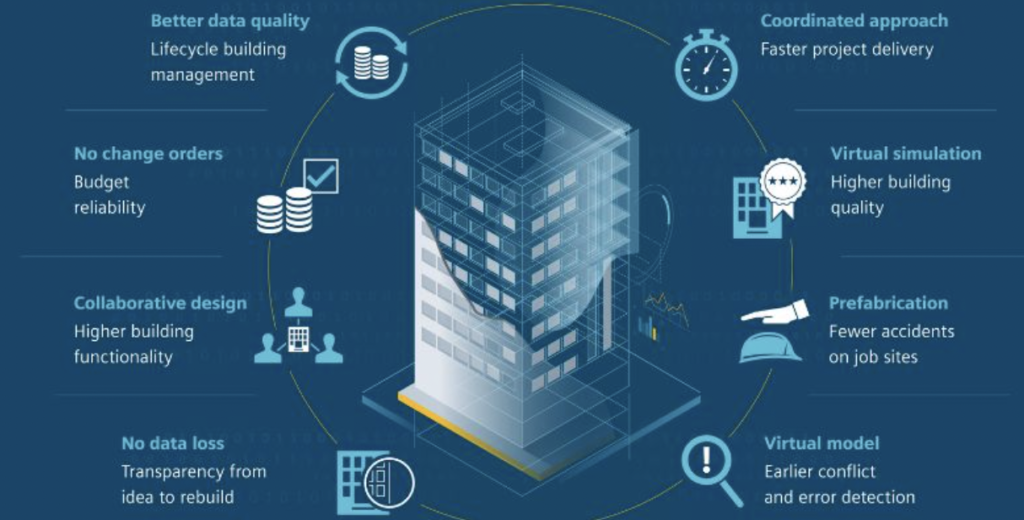
With drone imagery, sensors, and combined BIM models, the AI points to where there is structural inconsistency, deviation from specification, or incorrectly installed components. The sooner this is detected, the less costly the rework.
💡 What construction employers need to know
Project managers used to be hired for coordination and communication skills. Today’s PMs must also understand:
- Data interpretation
- Automated scheduling
- AI-supported forecasting
- Automated quality control
Hiring PMs with these competencies will dramatically improve project outcomes.
Common Mistakes Construction Teams Still Make
In my experience, even with such powerful tools available, many teams fail to get full value from AI and drones. The following are the most common mistakes that I see:
1. Treating Technology as an Afterthought
By the time AI and drones show up halfway through the project, most of that value has been lost. Active use starts with planning: bringing in the drone flights into early site assessments, using AI to model risk before breaking ground.
2. Poor training of teams
If people do not know how to use the technology, then the technology fails.
A drone is only as good as the person flying the aircraft.
AI is only as good as the data you feed it.
Teams will need to have practical training on the tools, ongoing support, and practice in using them before applying them in actual work.
3. Technology Used Only for Documentation
While the progress is well-documented with drones and AI, the actual value is in the prevention.
They can:
- Hazard Identification
- Predict shortages
- Catch grading errors early.
- Flag delays weeks in advance of when they actually happen.
If they were used only for documentation, then their full potential would be wasted.
4. Data insights ignored
I’ve watched teams get crystal-clear alerts of oncoming weather delay, productivity drop, or labour imbalance-and do nothing, because old habits were comfortable. Data only helps if leadership trusts it enough to act upon it.
📌 Employer insight layered onto each mistake:
- Treating technology as an afterthought → Hire and empower early adopters who embrace new tools.
- Poor training → Prioritise candidates who show adaptability and commitment to learning.
- Using tech only for documentation → Seek proactive problem-solvers who use tech for prevention, not paperwork.
- Ignoring data → Look for leaders who make decisions based on evidence, not habit.
Actionable Tips for Teams Adopting AI and Drones
From my experience, the following are some practical steps in making the adoption successful:
1. Start Small. Never try to change everything at once. First, focus on simple use cases: Mapping with drones, AI Scheduling, and Visual tracking of progress. Build momentum before expansion.
2. Train Early and Train Often. Make the training part of the roll-out, not an afterthought. Let your team practice in real environments; refresh them when the technology evolves.
3. Centralise Your Data. AI can’t help you when your information is scattered between your emails and spreadsheets. Bring all plans, schedules, drone maps, and progress logs into one digital home.
4. Track ROI to Justify Scaling. Measure the real value. Hours saved, Rework condensed, Delays avoided, Safety incidents prevented. Scaling of the technology is relatively easy if you can actually measure the results.
5. People-centric technology will never replace craftsmanship or experience. AI and drones exist to support teams, not replace them. Indeed, the human element remains the driver behind every successful project.
💡 What construction employers need to know
Every step of tech adoption becomes easier when companies hire for curiosity, problem-solving, and digital literacy. These traits now matter as much as technical experience.
The Future: Where AI and Drones Will Go Next
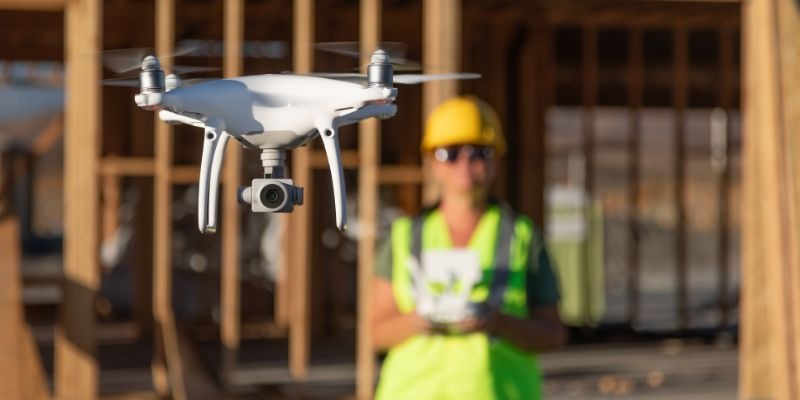
Although today’s tools already seem advanced, the next wave is fast-approaching. Autonomous Drone Flights Soon, drones will be flying on schedule with no operator present, uploading data automatically, and sending reports.
AI Orchestrating Full Workflows Soon, AI will be in charge of crew scheduling, equipment allocation, timing of orders, and compliance checks. Human teams will guide the strategy, not manage tasks manually.
Material Tracking with Drone Vision: Drones independently identify materials and log them into inventory systems, preventing losses and saving hours of manual tracking.
Robotics integrated with AI: where the robots do the repetitive field tasks of laying bricks, tying rebar, and moving materials, and where the AI orchestrates the workflows.
💡 What construction employers need to know
Each emerging trend (autonomous drones, AI-driven scheduling, robotic integration) creates new job categories. Companies that understand and anticipate these shifts will be prepared to staff future roles before competitors even realise they exist.
Final Thoughts
The construction business is moving quickly, and AI and drones are no longer nice-to-have tools; they’re foundational.
However, it’s not the teams with the most advanced technology that ultimately succeed, but those that bring in new technology early, train their people right, act on its insights, and make the technology a part of the build and not an afterthought.
- Why AI and drones became construction game-changers
- How AI improves planning and design
- How Drones Are Making Job Sites Smarter and Safer
- AI-powered project management beyond spreadsheets
- Common Mistakes Construction Teams Still Make
- Actionable Tips for Teams Adopting AI and Drones
- The Future: Where AI and Drones Will Go Next
- Final Thoughts